Learn how a roof hail claim is investigated, which evidence matters, how policy terms affect payment, and what to do before repairs erase the storm record.
Looking for verified roofing specialists? Check availability in seconds.
Check ZIP code availabilityWhat an adjuster is trying to determine
A hail claim is not decided by one dent, a neighborhood full of new roofs, or a contractor’s promise. The insurer investigates whether a covered event occurred during the policy period, whether that event caused direct physical damage to insured property, what repair is reasonably required, and how the policy says the loss will be settled.
The adjuster normally considers the reported storm date and location, roof material and condition, damage pattern, collateral marks on other exterior components, repairability, prior damage, wear, maintenance issues, policy exclusions, deductible, limits, endorsements, and applicable law. Inspection practices vary by insurer, roof type, and jurisdiction; there is no universal number of test squares or hail hits that guarantees approval or full replacement.
A weather report can corroborate that hail was reported near the property, but it does not prove that a particular roof was struck or damaged. NOAA cautions that severe-weather databases are incomplete and that some data may be estimated or unverified. Property-specific inspection evidence still matters.
What hail damage can look like on different materials
Hail does not produce one signature on every roof. Size, shape, hardness, wind, impact angle, temperature, roof age, substrate, and material all influence the result. Normal aging, foot traffic, installation damage, blistering, manufacturing conditions, tree contact, and old storms can resemble or coexist with hail effects.
Document the property without climbing the roof
Begin when the storm has passed and the area is safe. Stay away from downed lines, unstable trees, broken glass, standing water near electricity, and visibly unstable building components. Do not walk on a wet, steep, damaged, tile, slate, or metal roof. Ground-level photographs, interior observations, and a qualified inspection are safer than creating a fall or additional roof damage.
There is no universal 72-hour approval rule. Policies contain notice and proof-of-loss duties, and state rules differ, so report suspected damage promptly and follow the insurer’s instructions. Accurate dates and contemporaneous evidence are useful even when the full extent is not yet known.
Record the date, approximate time, duration, wind direction if known, and observations from people who were present
Photograph all exterior elevations, visible roof edges, gutters, downspouts, siding, screens, windows, fences, decks, and outdoor equipment
Photograph hailstones safely with a ruler and context before they melt; do not use objects found later as proof of size
Photograph interior stains or active leaks and protect belongings from water when it is safe
Save pre-storm exterior or roof photographs, maintenance records, prior repair invoices, and the roof installation documents
Create a claim log with the claim number, names, dates, calls, emails, inspections, estimates, and temporary-repair receipts
Prevent further damage without erasing the evidence
After documenting visible conditions, take reasonable steps to keep the property from getting worse. That can include moving belongings, catching water, or hiring a qualified contractor to install a temporary cover. Do not attempt rooftop tarping yourself. Tell the insurer about urgent work, keep receipts, and ask the contractor to photograph conditions before and during temporary repairs.
Limit work to emergency stabilization until the insurer has had a reasonable opportunity to inspect, unless delaying would be unsafe or cause more damage. Preserve removed pieces when practical and allowed. Do not make permanent repairs based only on an assumption that the claim will be paid; coverage and reimbursement depend on the policy and investigation.
What happens during the claim inspection
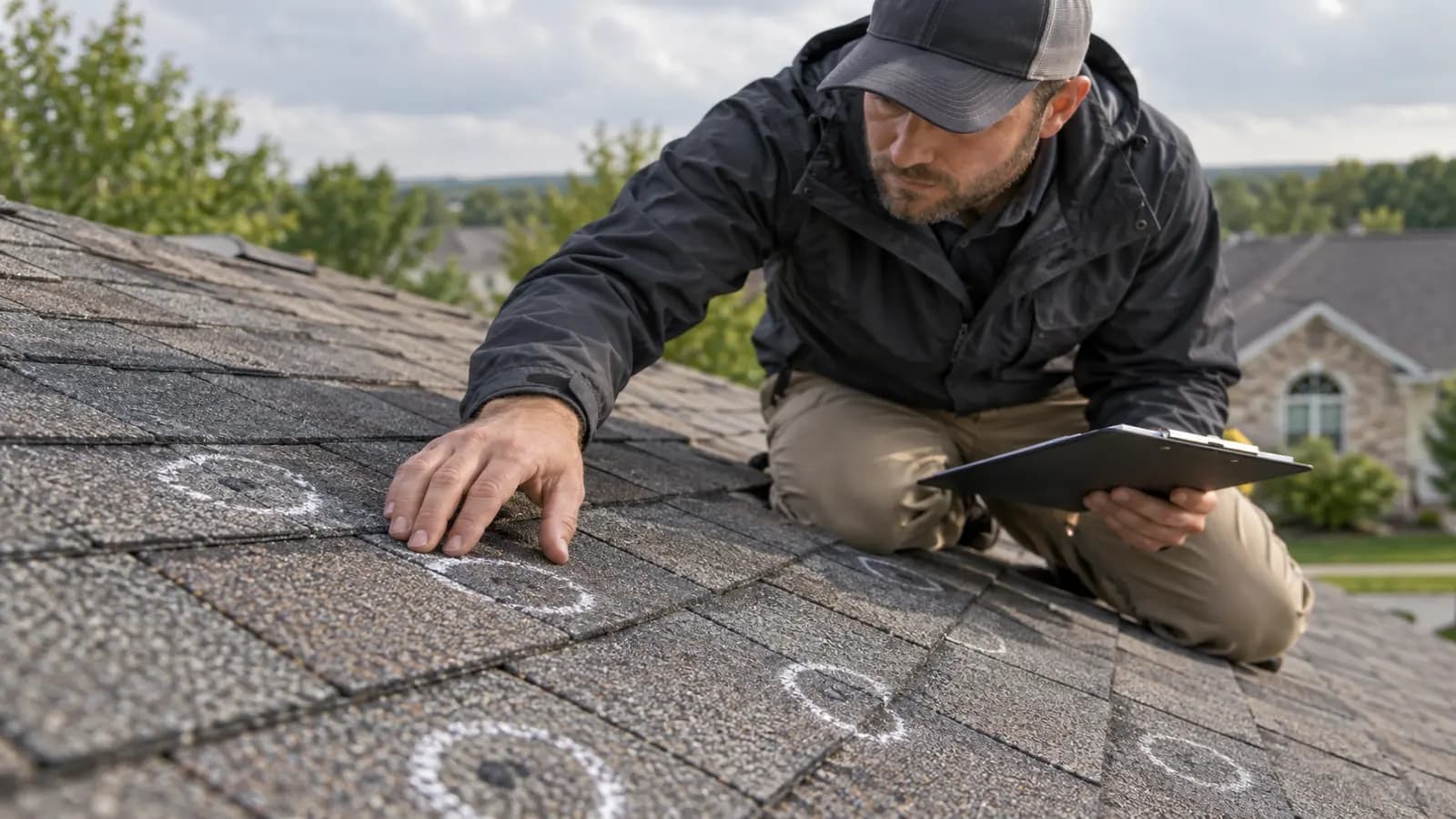
The adjuster may inspect exterior elevations, collateral components, roof surfaces when safely accessible, attic or interior areas, prior repairs, and temporary work. They may measure the roof, photograph conditions, mark areas for documentation, review weather information, and prepare or obtain an estimate. A desk or remote process may use photographs, video, aerial imagery, or another inspector; ask how to submit additional evidence if something was missed.
A roofer may attend to point out observed construction conditions and provide a repair estimate. The roofer does not decide coverage. Rules governing who may interpret a policy or negotiate a claim for a fee vary by state; public adjusters are separately regulated in many jurisdictions. Verify any professional’s role and license with the state insurance department.
Ask the adjuster which damage was attributed to hail, wind, wear, installation, prior events, or another cause; whether repair or replacement is allowed; which elevations or components are included; and which policy language affects the decision. Take notes rather than trying to win the technical argument on the roof.
Coverage depends on the policy, not the storm alone
Homeowners policies may cover wind and hail, but exclusions and endorsements can remove or limit that protection. Some policies have a separate wind-and-hail deductible, a roof payment schedule based on age, actual-cash-value-only settlement for roof surfacing, cosmetic-damage exclusions, matching limitations, or restrictions tied to roof condition. Read the declarations, deductible pages, loss-settlement provision, exclusions, and endorsements—or ask the insurer to identify them in writing.
Replacement cost value generally refers to the cost of repairing or replacing with materials of like kind and quality without a depreciation deduction, subject to policy terms and limits. Actual cash value reflects depreciation. Even with replacement-cost coverage, an insurer may initially pay an ACV amount and release recoverable depreciation after qualifying repairs are completed and documented. Deadlines, caps, and proof requirements vary by policy and law.
A percentage deductible is commonly calculated from the insured dwelling amount, not from the repair estimate. For example, a 2% deductible on $400,000 of applicable coverage is $8,000. Confirm the actual deductible and how it applies before signing a construction contract.
How to read the adjuster estimate and claim letter
Treat the estimate and coverage letter as different documents. The estimate describes priced work; the letter should explain the claim decision and relevant policy terms. Review roof measurements, slopes, waste, tear-off layers, materials, underlayment, flashing, vents, gutters, code items, tax, labor, overhead assumptions, depreciation, deductible, prior payments, and remaining amounts.
A contractor’s estimate may differ because it includes a different scope, measurement, material, local price, or code requirement. A difference does not automatically prove underpayment or overcharging. Ask the contractor to identify each variance with photographs, measurements, product requirements, code citation where applicable, and an itemized price. Submit that information through the insurer’s documented process before authorizing disputed extras.
Covered cause and date of loss
Approved repair versus full replacement scope
Roof and collateral measurements
Depreciation and whether any portion is recoverable
Applicable deductible and policy limits
Excluded, denied, or deferred items and the stated reason
Deadlines for repairs, supplemental information, proof of loss, or review
If you disagree with the hail claim decision
Start by asking for the written basis of the decision, inspection photographs, estimate, measurements, and the policy language relied upon. Correct factual errors—such as roof age, material, storm date, missed slope, or prior-repair history—with documents. Submit a contractor’s itemized findings and request reconsideration or reinspection through the insurer’s process.
If the issue remains unresolved, review the policy’s duties, appraisal provision, suit limitation, and complaint process. Appraisal commonly addresses amount-of-loss disputes, not every coverage dispute, and terms vary. Your state insurance department can explain consumer complaint options but normally does not act as your attorney. For a large or legally complex dispute, consider advice from a qualified attorney or properly licensed public adjuster after reviewing fees and conflicts.
Do not wait indefinitely while deadlines run. Keep communicating in writing and ask the insurer to confirm every applicable deadline.
Roofing and insurance red flags
Storm pressure attracts aggressive sales tactics. State laws differ, but misrepresenting the price, loss, deductible, or work performed can jeopardize a claim and expose the homeowner to liability. Texas, for example, prohibits a roofer who will perform the work from acting as the public adjuster on the same claim and prohibits deductible waivers; use your own state regulator to check local rules.
The bottom line
An adjuster looks for a covered event, property-specific evidence of damage, a reasonable repair scope, and the policy terms that control payment. Safe, prompt documentation helps; it does not guarantee coverage. Weather reports, collateral marks, and a roofer’s opinion support the record but do not replace the insurer’s investigation or the contract language.
If you need a qualified roof inspection after hail, submit your ZIP code and project details to request a free match with independent local roofers. Verify the provider and keep coverage discussions with your insurer or a properly licensed claim professional; there is no obligation to hire through GetLocalExperts.
Frequently asked questions
What does a roof adjuster look for after hail?
The adjuster evaluates whether a covered hail event caused direct physical damage, the pattern and material-specific condition of the roof and collateral components, repairability, prior damage and wear, measurements, and policy terms. There is no universal hit count or test-square result that guarantees replacement.
Should I call a roofer or my insurance company first after hail?
If you suspect damage, review the policy and notify the insurer promptly according to its instructions. A qualified roofer can document construction conditions and prepare an estimate, but cannot decide coverage. For active leaking, prioritize safe temporary mitigation and tell the insurer as soon as practical.
Will insurance replace my entire roof for hail damage?
Not automatically. The outcome depends on covered damage, repairability, affected area, policy language, endorsements, deductible, limits, matching rules, and state law. Some claims involve repair, some replacement, and some no payment because damage is excluded, below the deductible, or attributed to another cause.
What is recoverable depreciation on a roof claim?
Under some replacement-cost policies, the insurer initially withholds depreciation and may release eligible amounts after covered repairs are completed and documented. The policy controls what is recoverable, the deadline, and required proof. Actual-cash-value-only roof coverage generally does not provide the same later payment.
What can I do if my hail damage claim is denied?
Request the decision, estimate, photographs, and supporting policy language in writing. Correct factual errors, submit itemized contractor evidence, and request reconsideration or reinspection. Then review appraisal and complaint options and all deadlines; consider qualified legal or licensed public-adjuster advice for a substantial dispute.
This guide is general information, not a repair manual or a safety certification. Anything involving gas, live circuits, structural framing or standing water belongs with a licensed provider. GetLocalExperts is a free matching service and does not perform home services.
Sources and further reading
- Rebuilding After a Storm: Replacement Cost and Actual Cash Value — National Association of Insurance Commissioners
- Post-Disaster Claims Guide — National Association of Insurance Commissioners
- After the Storm, Read the Fine Print — National Association of Insurance Commissioners
- What to Know About Insurance and Your Roof — Texas Department of Insurance
- Roofing and Insurance: Know the Law — Texas Department of Insurance
- Storm Events Database and Data Limitations — NOAA National Centers for Environmental Information
- Roof 101 and Hail Impact Ratings — Insurance Institute for Business & Home Safety
This guide was researched and reviewed by the GetLocalExperts Editorial Team against primary regulatory benchmarks, state contractor licensing board standards, and FTC consumer protection guidelines.