Use inspection, trapping, durable exclusion, monitoring, and safe cleanup in the right sequence so the attic does not become accessible again.
Looking for verified pest-control specialists? Check availability in seconds.
Check ZIP code availabilityStart with exclusion, but use the right sequence
Scratching above the ceiling is not solved by tossing bait into the attic. Traps or labeled bait may reduce animals already inside, but an open roof return, vent edge, utility gap, or damaged soffit leaves the route available. Durable rodent control combines identification, population reduction, exclusion, sanitation, and monitoring rather than treating any one of them as the whole job.
“Exclusion first” means the entry route drives the plan—not that every hole should be closed immediately. Sealing animals or dependent young inside can create odor, damage, and animal-welfare problems. A competent provider maps the openings, determines which are active, closes safe secondary gaps, traps or otherwise removes the occupants, confirms the attic is clear, and then secures the final route. The exact sequence changes with the animal, season, structure, and local wildlife rules.
Keep people and pets out of the attic while you assess the problem. Do not disturb droppings, nests, insulation, traps, wiring, or an unknown animal. If you smell smoke or burning, see sparks or damaged energized wiring, hear an animal in occupied space, or encounter an aggressive or disoriented animal, leave the area and contact the appropriate emergency, electrical, pest, animal-control, or public-health resource.
Confirm that the noise is actually a rodent
Sound alone does not identify the visitor. Mice, rats, squirrels, raccoons, bats, birds, and building components can all create attic noise, but they require different removal methods and may be governed by different rules. Time of activity, location, tracks, rub marks, gnawing, nesting material, droppings, odor, entry size, and a camera can narrow the answer. Do not handle an animal, scat, or carcass to make the identification.
A mouse or rat inspection should extend beyond the attic. The animal may enter at the foundation, garage, utility penetration, crawlspace, plumbing chase, or attached addition and travel inside wall cavities. Conversely, roof-level activity may point to a climbing rat or tree squirrel. Ask the inspector to state the suspected species, evidence, active route, interior travel path, and unresolved uncertainty in writing.
If bats, birds, raccoons, squirrels, or other wildlife may be present, use a provider qualified for that species and verify local or state requirements. Exclusion timing, one-way devices, trapping, relocation, protected species, and dependent young are not governed by one nationwide rule.
Inspect every likely entry point
EPA recommends sealing holes inside and outside the home. For an attic case, that requires a full building-envelope inspection rather than a quick look through the hatch. Request dated photographs and a diagram that separates confirmed openings from maintenance recommendations.
Trap and monitor the animals already inside
For a limited indoor mouse problem, well-placed traps can provide visible evidence of capture, allow carcass removal, and avoid an inaccessible poisoned animal. Trap type, number, enclosure, placement, inspection interval, and disposal should fit the species and keep children and pets away. A professional plan should define who checks devices, how often, what evidence establishes continued activity, and what happens when captures stop.
Do not assume one quiet night means the attic is empty. Monitoring may include traps, cameras, non-toxic tracking tools, inspection of droppings or rub marks, and a defined no-activity period. The provider should distinguish a device count from a result: “six traps installed” is not the same as “all animals removed and entry closed.”
Live-capture and wildlife removal rules vary, and relocation may be restricted or inappropriate. Glue devices raise animal-welfare and monitoring concerns. Ask what devices will be used, how frequently they will be checked, how captured animals are handled, and which law or credential applies to the target animal in your jurisdiction.
Use rodent-proof materials without damaging the house
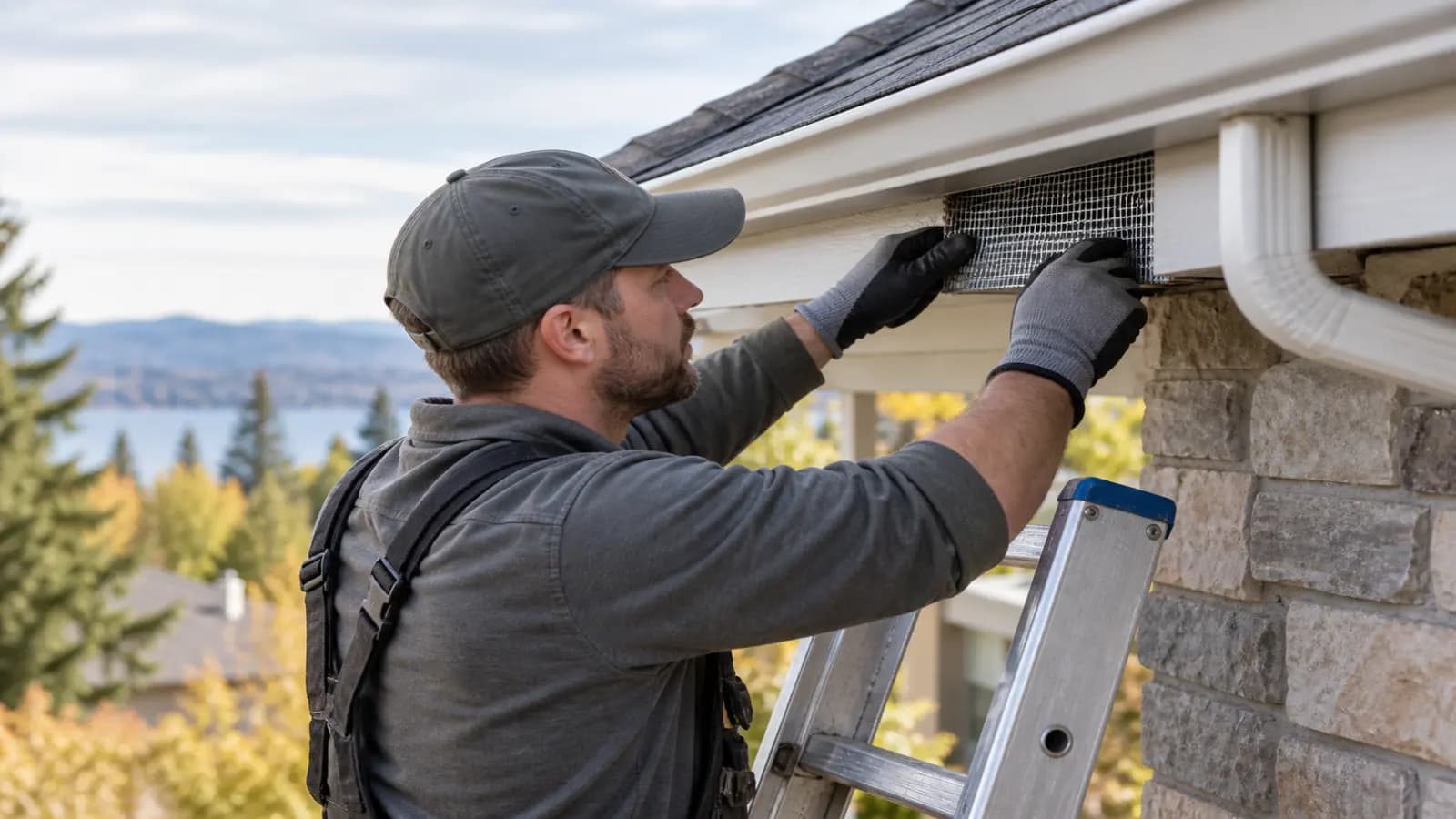
Mice can use gaps around 1/4 inch, while rats can use openings around 1/2 inch. Rodents can also gnaw some foam, plastic, rubber, and wood, so appearance alone does not establish a durable repair. Appropriate work may use corrosion-resistant metal mesh, hardware cloth, sheet metal, mortar, concrete, metal flashing, compatible sealant, door sweeps, or manufactured vent and roof components, depending on the substrate and opening.
Material choice is only half the detail. The repair must be mechanically secure, weather-resistant, compatible with roofing and flashing, and shaped so it does not create a new water path. It must also preserve required attic, appliance, plumbing, and combustion ventilation. A pest technician should not block a vent, drainage opening, flue clearance, or equipment intake merely because it looks like an entry point; roofing, HVAC, chimney, electrical, or other trade coordination may be necessary.
Foam or caulk may be part of a layered repair but is not a universal chew-proof patch. Ask the bidder to name the exact material and fastening method for each opening, identify finish and paint work, and state who is responsible if hidden rot, failed flashing, or damaged framing appears after disassembly.
Treat rodenticide as a controlled pesticide decision
Rodent poison is not automatically required for an attic infestation. EPA and NPIC warn that rodenticides can harm children, pets, and wildlife if misused, and some poisoned rodents can expose animals that eat them. Indoor carcasses may also become inaccessible. Ask why bait is needed, what trapping or exclusion alternatives were considered, and how carcass searches and follow-up will work.
If a pesticide is used, obtain the product name, active ingredient, EPA registration number, label, target species, application sites, station type, service schedule, and emergency instructions. The label controls legal use. Household consumer bait must remain secured in the station supplied with it and must be used only where its labeling allows; professional products and applications can differ.
Tell the provider about children, pets, visiting animals, wildlife, food storage, and access patterns. Never scatter loose bait, move a secured station, reuse a pesticide container, or place bait where occupants or nontarget animals can reach it. Suspected human exposure belongs with Poison Control at 1-800-222-1222; suspected pet exposure belongs with a veterinarian or animal poison resource without waiting for symptoms.
Clean droppings and insulation without raising contaminated dust
CDC says not to sweep or vacuum dry rodent urine, droppings, or nesting material because disturbing them can put contaminated particles into the air. For a small, accessible cleanup, follow the current CDC procedure: ventilate as directed, wear rubber or plastic gloves, thoroughly wet material with an appropriate disinfectant or freshly prepared bleach solution, allow the stated contact time, wipe it up, dispose of it, disinfect hard surfaces, and wash hands. Follow the disinfectant label and never mix bleach with ammonia or other cleaners.
An attic may not be a small-cleanup environment. Heavy infestation, extensive contaminated insulation, confined access, heat, fall hazards, exposed nails, damaged wiring, HVAC contamination, or an occupied person with health vulnerabilities are reasons to use qualified cleanup help. CDC lists additional protective measures for heavy infestations, including respiratory protection subject to applicable fit-testing and occupational requirements; an ordinary dust mask should not be presented as equivalent.
Do not sell automatic whole-attic insulation removal from the sight of a few pellets, and do not promise that deodorizer or fogging makes contaminated material clean. The proposal should map affected areas, state what will be removed versus cleaned, identify disposal and replacement depths, protect air pathways and occupied rooms, and explain how completion will be verified. If rodents entered ducts or HVAC equipment, CDC advises professional rodent removal and appropriate duct-system expertise.
Inspect wiring, ducts, and building damage separately
Gnaw marks do not reveal whether a conductor is safely intact. If wiring, junction boxes, flexible duct, plumbing, roof sheathing, framing, or fire blocking is damaged, have the appropriate qualified trade evaluate it. Do not touch, tape, energize, or bury suspect wiring under new insulation. Active sparking, smoke, burning odor, heat, or a repeatedly tripping protective device requires urgent electrical attention and may require emergency services.
Define these repairs separately from pest control. An exclusion company may identify damage without being licensed to repair electrical, structural, roofing, chimney, or HVAC systems. The contract should say who opens and restores finishes, who photographs concealed conditions, and whether the exclusion warranty depends on completing another trade’s repairs.
Compare exclusion quotes by scope, not hole count
Provide the same access and history to each bidder: where and when noise occurs, sightings, pets, previous trapping or poison, roof work, additions, leaks, and any cleanup already attempted. A useful proposal connects every charge to evidence and defines what successful completion looks like.
Suspected species, evidence, active and potential entries, interior routes, inaccessible areas, and photo diagram
Removal method, device type and quantity, placement protections, check frequency, carcass disposal, and clearance standard
Opening-by-opening material, fastener, finish, weatherproofing, ventilation, roof-access, and trade-coordination scope
Rodenticide product and label information, station ownership, placement, monitoring, retrieval, and exposure plan when applicable
Cleanup area, CDC-aligned method, containment, insulation removal and replacement, disposal, HVAC boundaries, and completion evidence
Electrical, roof, structural, duct, landscape, tree, and sanitation work included, excluded, or assigned to another provider
Price, deposit, visits, schedule, change orders, warranty term, covered openings, exclusions, callbacks, and transfer conditions
A practical example: trapping without exclusion
Imagine a company places four bait blocks, hears nothing on the return visit, and offers monthly service. A second company photographs a chewed fascia return, two screened vents in good condition, rub marks at the opening, and a travel path to the insulation. It proposes protected traps, scheduled checks, a metal-and-flashing repair after activity stops, a camera recheck, limited cleanup, and a written warranty on the repaired opening.
The second scope explains entry, removal, confirmation, repair, and follow-up. That does not make every line automatically correct—the animal identification, roof repair, ventilation, pesticide decision, cleanup method, price, and warranty still need review—but it gives the homeowner measurable work to compare. The first scope reduces visible activity without explaining how recurrence will be prevented.
Prevent another attic infestation
Store pet food, bird seed, and pantry goods in pest-resistant containers; clean spills; secure trash; eliminate accessible water; reduce clutter; and remove nesting shelter near the structure. Correct door seals, vent damage, roof deterioration, utility gaps, and foundation openings. Manage branches and vines that provide roof access based on the target animal and sound tree-care practice rather than relying on one universal clearance distance.
Inspect repairs after storms, reroofing, HVAC or cable work, solar installation, siding changes, and additions. Ask contractors not to remove exclusion mesh or leave penetrations open. Keep warranty photographs and the opening diagram so a future technician can distinguish a failed repair from a new route.
Schedule the contract’s follow-up and continue watching for fresh droppings, gnawing, odors, captures, or noise. Old evidence may remain after control, so date photographs and use monitoring to distinguish past contamination from renewed activity.
The bottom line
Long-term attic rodent control is a documented sequence: identify the animal, map entry and travel routes, remove or reduce the population, close openings with building-compatible rodent-resistant materials, confirm clearance, address damage, clean contamination safely, and monitor the repair. Poison or traps without exclusion leave the building available; indiscriminate sealing can trap animals inside.
If you hear attic activity, submit your ZIP code and observations to request a free match with independent local pest-control providers. Verify the provider’s pest or wildlife credential where required, compare written scopes, and bring in qualified roofing, electrical, HVAC, or cleanup help when the evidence crosses those trade boundaries; there is no obligation to hire a matched provider.
Frequently asked questions
Should I seal rodent holes before setting traps?
Map all openings first, then use a species-appropriate sequence. Safe secondary gaps may be closed while active routes are monitored, but blindly sealing every hole can trap animals or dependent young inside. The final active opening should be secured after removal and a defined clearance check, subject to the animal and local rules.
Is poison or trapping better for rodents in an attic?
Trapping can confirm captures and allow carcass removal, which is useful in an enclosed structure. Rodenticide may be appropriate in some professional plans but creates exposure, wildlife, monitoring, and inaccessible-carcass considerations. Neither method prevents return unless entry points and supporting conditions are addressed.
Can I vacuum mouse droppings from attic insulation?
Not while they are dry or before disinfection. CDC says not to sweep or vacuum dry rodent urine, droppings, or nesting material because this can put contaminated particles into the air. Follow current CDC wet-disinfection instructions for a limited cleanup and seek qualified help for heavy infestation, extensive insulation, ducts, or unsafe attic access.
Does all attic insulation need replacement after mice?
Not automatically. The decision depends on the amount and distribution of urine, droppings, nests, carcasses, odor, moisture, and whether the material can be safely accessed and cleaned. Ask the bidder to map contaminated areas and justify removal quantity instead of treating any rodent evidence as proof that the whole attic must be replaced.
What should an attic rodent exclusion warranty cover?
It should identify the exact repaired openings and materials, term, inspection or maintenance duties, callback and repair remedy, response process, exclusions, and treatment of new openings or later roof, utility, solar, siding, and remodeling work. Confirm whether trapping, cleanup, and damage repair are covered separately.
This guide is general information, not a repair manual or a safety certification. Anything involving gas, live circuits, structural framing or standing water belongs with a licensed provider. GetLocalExperts is a free matching service and does not perform home services.
Sources and further reading
- How to Clean Up After Rodents — Centers for Disease Control and Prevention
- Hantavirus Prevention — Centers for Disease Control and Prevention
- Identify and Prevent Rodent Infestations — U.S. Environmental Protection Agency
- Safely Use Rodent Bait Products — U.S. Environmental Protection Agency
- Rodenticides Fact Sheet — National Pesticide Information Center
- Controlling House Mice — Colorado State University Extension
This guide was researched and reviewed by the GetLocalExperts Editorial Team against primary regulatory benchmarks, state contractor licensing board standards, and FTC consumer protection guidelines.